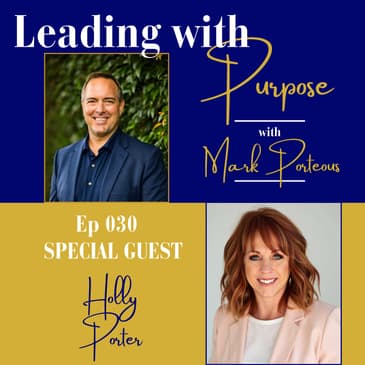
The most powerful transformations rarely happen by accident. Holly Porter believes retreats create the space where real change begins, but only when they're built with intention, community, and purpose. We explore how her near-death experience reshaped her life, why she's working to elevate the retreat industry through the International Retreat Association, and how meaningful experiences can continue transforming lives long after people return home. Along the way, Holly shares why lasting transformation isn't created during a single event, but through the relationships, support, and purpose that continue long after the retreat ends.
Keytakeaways:
- Why retreats accelerate transformation through human connection.
- The importance of creating community before, during, and after every retreat.
- How purpose often emerges through adversity rather than careful planning.
- Why collaboration strengthens the entire retreat industry.
- How retreats can naturally lead into premium coaching relationships.
- Why focusing on daily progress creates long-term impact.
About the Guest:
Holly Porter, Hon. Ph.D. is a serial entrepreneur, international speaker, retreat industry leader, Utah real estate broker, and 17-time best-selling author. As the founder and CEO of Retreat RnR and founder of the International Retreat Association, she is dedicated to helping retreat leaders, venues, and industry professionals build successful, purpose-driven businesses.
With more than 30 years of experience in business consulting, real estate, events, and leadership, Holly has launched 11 companies and spent decades creating opportunities, building communities, and helping others grow. She is also the founder of the Adventure Bucket Wish Foundation and host of the All Things Retreat Podcast.
In 2021, Holly survived a 70-day hospitalization with COVID-19, including multiple intubations, sepsis, and a profound near-death experience that transformed her perspective on life and purpose. That experience inspired her mission to help others lead with greater purpose, passion, and impact.
Today, Holly speaks internationally on entrepreneurship, resilience, leadership, retreats, and personal transformation. Her message is simple: challenges can become catalysts for growth, and every setback can be transformed into a powerful new beginning.
Holly’s Website: hollyporter.com
Connect with Holly: https://linktr.ee/hollyporter
Free Gift: 2026 Retreat Industry Trends you should know about! https://internationalretreatassociation.org/
About Me:
Hi, I’m Mark Porteous; the Soul Connector.
My stand is for ALL people to recognize themselves as Divine Beings who have chosen the human experience for a reason and to live in alignment with that knowing, so they can THRIVE in their purpose of transforming lives.
I help mission driven entrepreneurs to make their Soul Connections so that they can impact and change the world, scale their businesses to six and seven figures, and enjoy thrilling Soul Success in every arena of their lives.
Connect with me at:
https://www.linkedin.com/in/markcporteous
https://www.instagram.com/mark.porteous1/
https://www.facebook.com/markcporteous/
Take the Soulful Leadership Assessment here: https://markporteous.com/#tve-jump-184964db927
Thanks for listening!
Thanks so much for listening to our podcast! If you enjoyed this episode and think that others could benefit from listening, please share it using the social media buttons on this page.
Do you have some feedback or questions about this episode? Leave a comment in the section below!
Subscribe to the podcast
If you would like to get automatic updates of new podcast episodes, you can subscribe to the podcast on Apple Podcasts or Stitcher. You can also subscribe in your favorite podcast app.
Leave us an Apple Podcasts review
Ratings and reviews from our listeners are extremely valuable to us and greatly appreciated. They help our podcast rank higher on Apple Podcasts, which exposes our show to more awesome listeners like you. If you have a minute, please leave an honest review on Apple Podcasts.
Holly, hello. Today's guest, Holly Porter, founder of International Retreat Association, entrepreneur, bestselling author, and longtime advocate for the transformational power of retreats. Holly launched her first business at age 12 and has since built 12 companies, authored 17 bestselling books, and earned numerous leadership and service awards, and spent more than two decades creating experiences that help people grow personally and professionally. Today, through the International Retreat Association, Holly is working to bring greater professionalism, credibility, and collaboration to the retreat industry by creating a global community that supports retreat leaders, venues, and service providers. She believes retreats are the most powerful vehicle for human transformation, and she's dedicated to helping the people who create these experiences thrive. Help me welcome Leading with Purpose to Leading with Purpose. Hello, Holly.
Holly Porter:Hi, Mark. Thanks for having me.
Mark Porteous:It's so good to have you here. This is a conversation we've had already, and I'm really excited to make this more public. I'm with you that I believe in the power of retreats and in-person events. I'm excited to hear more about how you came into the retreat industry and really the transformation role in general, you have a very powerful story. Again, starting with your first business at 12, how did that happen?
Holly Porter:Well, my dad and mom were both entrepreneurs, so you kind of get thrown into it just a little bit. Really, not my dad just expected us to earn our way. Yeah, it's kind of how we were raised, and so he hired us. We had to buy our own school clothes from 12 years old on up. He would buy our shoes, because, you know, those tennis shoes aren't cheap, even then. And so I went to work in his office, and, and you know what really led me to start doing my own stuff at 12 was looking at the wall in the office, and I'm, you know, I'm doing the dirty jobs, I'm vacuuming, cleaning toilets, and filing, and all the stuff the secretary didn't want to do, so she loved having us there, and I look on the wall, and it said minimum wage $3.33 and my dad was paying me $2.50 so that was like my first, hey, stick up for yourself, you know. Hey, how come this says that by law, you know, as you're reading all the fine print as a kid, anyway? So that's where I was like, I want to be paying my value. That's amazing.
Mark Porteous:That is so powerful, though, to be recognizing that at that age, and yeah, putting the things together. So, I'm just curious, did you get a raise?
Holly Porter:I did not, because you know, I was child labor, so it's like legally I wasn't even allowed to be working for him. So, I, I think we did get checks, though. It seems like we got checks, because I remember going to the bank and cashing them, and anyway, and it just, you know, every time you get a check from someone, it's like, yeah, it's a reward for what you did, but I don't know, I guess there's just something different in the entrepreneurship stuff, you know, I always babysat, had my own little gig going there, and I was a good babysitter, because I had, I'm from a family of nine, and I'm number three, so I had lots of experience with kids, and I remember at eight years old, no lie, I'm not lying, eight years old I was babysitting a four day old baby, and I look back now as a mother, and I'm like, oh my gosh, I would never, I mean, my daughter did babysit at eight as well, because she was very mature, but I just think, oh my gosh, a brand new baby, scary, you know.
Mark Porteous:Yeah, no, times are very different, and yeah, as parents who went through that, it is funny how we are so much more cautious. And again, I became a parent just before I turned 40, so I was a little bit more cautious than I would have been at 20.
Holly Porter:That's true, and each kid you have, you're a little less cautious, maybe that's good, maybe that's bad, but you're kind of like, yeah, been here, done that, you're fine,
Mark Porteous:absolutely. It's really funny that, how much we've survived, and yet we want to protect our children from all the things we survived.
Holly Porter:Yeah, yeah, I just, yeah, the entitlement stuff is just wild, you know. I have all millennial kids, they're all adults, but they're all entrepreneurs, except maybe two out of eight, so you know, they just.. it's kind of in our blood.
Mark Porteous:Absolutely, and I think that even getting a check from your father, like instead of being an employee, you were just a consultant doing these extra jobs, you're that was your gig at that time, and again, I think there's something about just having a bank account and understanding the currency, the energy of money, and imagine you learned all kinds of lessons about leadership and entrepreneurship from all of that from Bay. You sitting and everything else, yeah. How did that lead into, like, the transformation part of it? How did you get into the personal development and personal transformation?
Holly Porter:You know, I didn't until I was married with kids, of course. I got married young. I am in Utah, and I, I really just started, I would say 20 years ago. So, yeah, I was buried, had all my kids, and when I really understood what it was about. And then I ran for political office, best and worst thing that I ever did. Actually, I ran twice. I ran for a city council position and a mayor position, realizing these people didn't want change, they don't vote change, they say they want change, and isn't that the mantra of a lot of people? You say you want something, but what are you willing to do to get it? And so I felt like I was just banging my head against the wall, you know, dragging people along. And so I decided, about a year after the second one, I mean, I did well, but I didn't win, and honestly, I was the biggest winner, as far as I'm concerned, that just wasn't my journey. It wasn't the type of people that I needed to surround myself. So I started then doing like more and more personal development. I moved away from that town, even though I didn't move far. I moved away to just a different.. I started traveling, I started writing my books, and it felt like I was now I was having people gravitate towards me instead of pulling people, they were coming wanting what I had, instead of like feeling like it was being forced, almost. And what a better feeling. And I'll tell you what, if I can guarantee you, if I would not have had the personal development behind me that I had when I got COVID in 2021 and was in the hospital for 70 days, I wouldn't survive, because I can remember the nurse coming and telling me in my ear, your sisters, it was in between my first and second intubation, and I just couldn't keep my, my oxygen up, and she was telling me in my ear, you know, this is all in your head, this is a mindset, now your sisters told me you're a speaker, you do this, you do that, you know, and she's saying all that. I'm thinking, you're such a
Holly Porter:meanie, you know. And I look back now and think, no, that was, that was like what I needed to hear. You, you can do hard things, and even though I had to get back on a ventilator, it was my lungs that were so sick. My mind knew I could help myself get better, but you know, sometimes your body doesn't agree with your mind.
Mark Porteous:Yeah, that's a huge lesson of being an advocate for yourself. And you started learning that as a young child, asking for your value, and then having the idea that your mind can help your body heal, and your mind can can win this battle. Obviously, it did. Here you are.
Holly Porter:Yeah,
Mark Porteous:Retreats. Like, I know that first of all, we all retreated, you know? That was one of the things about COVID. We all went into retreat for a certain amount of time, depending on how we were, where we were, how long that lasted.
Holly Porter:Yeah,
Mark Porteous:And then coming back out of it, it took people a while to travel, somewhere like ready, some people, yeah, like still the whole time, actually, but I feel like now there is this need for connection, that there's just been such a lack of human connection, and of course, now with AI and all the technology, but just that period of being locked down created more of an awareness, yeah, need of human connection.
Holly Porter:So true. And you know, I think a lot of it too. If you're an extrovert or introvert, I think that makes a difference in how you want to participate, because I would, as I call myself an event junkie, I like being around people. People, you know, energized me. It's interesting, though, since I got so sick, and you know, the Covid kind of made us a little more reserved. I feel like a lot of people have gotten a little more reserved, and so I'm sure I still carry some of that fear, you know. It's like, I'll hug you, but it's like, let's not be too close, and I think if I don't feel like I'm as much as an extrovert as I was, there's a word for that. Do you know what it is?
Mark Porteous:Ambivert, ambivert. Well, an ambivert usually means that you get, need both, you need time alone to get charged up. The way I have learned about what an introverted extrovert is, is not just like how you act, it's really about where you get recharged. Do you get recharged when you're alone, or do you get recharged when you're around people? And just like you, I've always gotten recharged around people, but in the process, I've learned that I also need, like, alone to be, because there's never really a loan when you're a parent, a husband, and an entrepreneur. Getting alone time is part to me of retreat. Even when you're in a group, it's nice to be able to break off and do your own thing, or go up to your room and hear the journals, and that recharging part.
Holly Porter:I think it stirs up emotions, and it's like if you're not giving yourself that space to deal with those emotions. I was an emotion stuffer. For years, you know, I just.. I didn't.. I didn't deal with that. It was like I'm in survival mode all the time. Go, go, go, go, go. And I think that was a lesson. I feel like God put me in a coma in the hospital to get me to slow down, to get me to listen, because there were messages I wasn't hearing. And unfortunately, that was a hard lesson to learn, but hopefully other people don't have to go through that to get their lessons, but it's like sometimes we just need that down time to listen.
Mark Porteous:Tell us more about that, because you just jumped into coma, and maybe most people don't realize. Tell us the full story of what happened with a coma, and what do..
Holly Porter:yeah,
Mark Porteous:How you came out of that.
Holly Porter:Oh, sure. So, well, if you want to hear the whole near death part story stuff, go YouTube and YouTube my name. There's lots of podcasts on there for the near death, because it's a long, long story. But the gist of it was went to a conference right when we started going back, they took all the precautions, so I don't know where I ended up getting it. About 20 of us got COVID while we were there, follow 21 ended up in the hospital for 70 days, intubated twice, trachea, sepsis, couple other infections that were worse than Covid. They said, and I should have never walked out of there like that. It was a miracle that I was one of them, and I feel great, grateful that I did, but I saw a lot of things. I was put in a coma for about probably around 30 of those days of the 70, and honestly, those were like my better days, because I had lost all five senses. Like, they tie your hands to bed, the bed when you have a ventilator, so you won't pull it out, but I had no desire to do that, because I liked my breath, and taste and smell were gone from Covid. I couldn't hear, like 90% of my hearing was gone from the ventilator. They never could figure out why, but everyone sounded like the Charlie Brown school teacher. That's how everybody sounded. And then I'm legally blind, naturally, so without correction, I couldn't see who anyone was, unless they were about eight inches in front of my face, and they all looked the same, yellow hat, yellow mask, yellow gloves, and gowns, and eye protection. So, like, oh, I was happy to be in a coma, plus I had a lot of out-of-body experience, I had a really good spiritual transformative experience, and a near death experience. So I was having some good journeys while I was there, but I was grateful they put me in a coma, because you know, when you can only open your eyes and kind of just look around, and really all I could see in front of me was that dang clock, and I never knew if it was am or pm, and if they tell me
Holly Porter:something like they're going to come back, I remember my son being there with me one day, and he's like, yeah, he's, he's like me, he's very ADHD. He was only there for a few hours, I think. My daughter said he called her 22 times in the six hours that he was there, and he said, "Mom's really mad because, or really upset, because they said they were going to come do physical therapy, which I hated, by the way, because they make you sit up and stand up with a ventilator on, it was miserable, and he's like, they made her, they made, they told her they were coming back, and it had been like two and a half hours later. Mom's really upset, she's like, well, they're busy, they have two floors of people with, go, he's my daughter's trying to explain to him, and, oh, anyway, just, there's some crazy stories that I share on some other podcasts
Mark Porteous:Coming from just the basis of that story, knowing that you were a retreat junkie, but then you caught this deadly disease while you were at a retreat. How did you go back into retreats, and what led to creating the International Retreat Association.
Holly Porter:Yeah, well, that's been almost, almost a five year journey to come to that, because we just started it this year. So I had another company called Retreat R and R, that's also part of my near death story, and I have a nonprofit that's also part of my near death story. So I was in working on a software company, I also am a real estate broker, so we were working on buying and selling luxury retreat properties, kind of a little niche that no one was doing, and I just knew I had to get the book out. I knew when I came out of the hospital that I had two more books to write, which kind of bummed me, actually, because I think I had 13, you know, a lot of more anthologies, some were my own, and I just wasn't interested in writing anymore a book. I was like, I've been there, done that, I'm done. So I was like, okay, I have two, I know one's the near death story, and I know one's the philanthropy work later that's coming out of all of this. So I got a while for that one, but I knew last year was the year it had to get done. I knew 1111 which november 11, which is 1111 that was my launch date. Also, the day I got the hospital, very significant to my story. My birthday is one one, like there's just like so many things that were around that, that it's like when you know, you know, and while I was a. Writing that book, it's a spiritual and personal development book, because it's got to teach people things. I just don't want it just to tell my story. I want people to actually feel like they get something out of it. And I just was in the spiritual space, and I was gifted the idea of International Retreat Association, and I, I was like, no, I don't want another company that I had 11 and I was just like no, but I went down the rabbit hole for a minute, just enough to realize that there's two to 3 million estimated retreat leaders, not counting venues, not counting service providers that are other millions and millions that are in this industry, and there's not an
Holly Porter:association to support them, and I was very intrigued then, because I'm an early adopter. I love innovation, and I was like, 'Wow, that's a lot of transformation going on without any guidelines, no value set, no professional standards. So I said, kind of made a deal with God. Alright, help me not miss my deadline for my book, and once I get that published, then I will put 110 and my book was the first time in my life. Honestly, I've always had anywhere from two to four companies at a time that I, I focused on that book, like I set everything on hold, and I just like the first time I really did the one thing that everyone always said, you should just do one thing, right? I'm never going to. So anyway, that was kind of where the whole idea came. As soon as I got the book launched, I incorporated International Retreat Association in December, and we just opened up membership about a month ago. So here we are.
Mark Porteous:That's pretty amazing. I'm just curious, what is your, like, the goal or the big vision with the International Retreat Association, like what do you see three years, five years down the road as some of the value and benefit from people that are in it, and what you want it to do out in the world.
Holly Porter:Yeah, well, I definitely want a lot of collaboration going in. My whole motto for the has been since I had a magazine, I started it with that it was build relationships, build community, build prosperity. Prosperity can be money or not money, you can be prosperous in many things, but I feel like that's the order they need to go in, and really, in the end, I just want to have the right people connected to the right people, have one network where people can go. I mean, there's lots of places that are coaching. Like, I feel like my role is a support system. I'm not here to compete with anybody. I feel like it's just like, nope, we can all be in the same transformational spaceness, you know, wellness space, whatever. They all go together under retreats, corporate, and be under one roof, but where we can, you know, work together and grow together, and, and really have integrity with what we do. So, I mean, I'm in the real estate industry, I think we're number two, right up from the cesspool of used car salesmen, and it's like kind of stinks to have that title, you know, it's like, no, let's, let's give it a good name. Let's really do it right. We've created our own professional standards, subject to change, as we grow and learn, and our advisory board comes up with new things, and whatever. I am not flighty, but I can change on a dime. I love change. I love innovation, because if it's the best thing to do now, fine. Maybe next year it's not, and we shift, and really it's.. I mean, that's why my book's called Near Death Shift. Everything to me is about shifting and making things better. My motto when I was sick was "Better is better. What can I do today to be better than I was yesterday? And now that I'm a lot better, I still think we can apply that every day, like, what can I do today that makes that moves the needle, that that makes me better than I was, and that's the whole personal development thing for me, right?
Mark Porteous:Yeah, absolutely. I know that a lot of retreats are around that, around either health and wellness or some type of personal development. We run retreats that are for business growth, or their mastermind retreats, and I know you just mentioned earlier that there's 2 million retreat leaders that already know that they're retreat leaders. I see a lot of like coaches, even outside of our transformation industry, people like in real estate, people in construction hosting retreats as part of the way to be able to stand out from other people in their industry, but specifically in the transformation industry, coaches, authors, you've mentioned anthologies, hosts of anthologies could bring together all of the authors that were in their book and host retreats. I'm curious, like, how you see integrating retreats for people that are in the personal development industry that may not have really considered doing a retreat before, maybe they considered it, but they're like, there's too much risk, there's.. I don't know how I would fill it, or all the other doubts. Questions that come up with somebody who either hasn't done it or did it and didn't have the greatest experience the first time.
Holly Porter:Yeah, I to me it's like we don't know what we don't know. And when you're saying that, what I'm thinking of is a lot of different business podcasts that I've been on. I've been able, I feel like I didn't really have to talk the person into it, but it was like planted the seed. Hey, you should be doing retreats. Like, I'm so supportive of men's retreats, because I think they're so underrated, and men just don't even realize what kind of transformation they can get. They think, oh, the woman's going, and they're just having a little girls' trip, and it's not really what it's about. And so, like, I really want the association to have a strong men's, you know, men in it, just so they can understand they need transformation as well. But I've planned that seat to a lot of men, saying, "Hey, you know, your business is doing this, and do you realize.. I mean, a lot of people have these high ticket.. let's talk about that for a bit.. author, speaker,coaches, world, right? So, my thing is, I train people that, hey, you have this high ticket coaching package, but how are you selling that? You're probably not getting on stage in 45 minutes and selling a 10 to $25,000 package, right? You're dripping on them, you're bringing them in, you know, with other things, and that takes time. What if you had a two and a half day to start retreat somewhere, maybe close to your own backyard, so you can drive there, whatever, and bring people in. Now they know better. Do they know, like, and trust you after two and a half days? Maybe, maybe it's a five day or four day, whatever that looks like. You give them lots and lots of content. You decide if you want to work with them. They decide they want to work with you, instead of getting in a $25,000 contract for a year, and then going, what did I just do? Like, I love my contracts, by the way, so they, to both sides, can get out of them, because I think you know it's not always a good fit, and, and we should never,
Holly Porter:I've never forced anyone to buy a real estate, buy a house, or anything from us, if they didn't want to work with me, I would always let them out of their contract, I'm not forcing that. It's like this is the biggest purchase of your life. A lot of times you know you're spending all this money getting someone to coach with you, for instance, and it's like make it a good fit, but also you want to know that. And then retreats.. the I can't think of a better way than a retreat to get to know someone to decide if you're going to drop, you know, 1000s of dollars with them. Yeah,
Mark Porteous:I love that. I agree with that. My very first retreat I did was again a mastermind retreat, where I literally had my coaches come in, my advisors, my spiritual advisors for my business to Orlando, and we're like, wow, with five of us, imagine if there were 25 of us. And so that was the first plan, but then we created the soulful leadership retreat, and over the years, with over 100 people there, and being over three days, there was retreat aspects to it, but many of the retreat trainers that we know told me, I can call it whatever I want, but it was not a retreat, it was an event, it was a conference, it was something in between, and so we call it the soulful leadership experience now. Oh, yeah. Differentiate between when we're having something that is a transformational experience, but also enrollment event as well,
Holly Porter:Right?
Mark Porteous:Yeah, and so there are retreats that have an enrollment aspect to it, and I'm curious to like, what defines that? What size is that? Are there different structures between, like, just a retreat at a suite or in an Airbnb versus, like, at a resort or retreat center? How many people can you have in there? And then how do you consider, like, weaving in your offer? We have retreats that are part of our high-end mastermind, and that's the delivery, but you're talking about having something where people pay to come to a high-end retreat, correct? And then from there you make some type of offer during the retreat.
Holly Porter:Yeah, where you, they continue. I want to back up for a second, though. I almost want to say I hope, and I do teach people to have at your retreat. Make sure you're seating it prior, having a Zoom call before you all get there, so you recognize faces, and then have a way to integrate whatever you're doing, especially if it's transformational. Even more, make sure that you're doing some things after with them, but you include that in the price, and they understand there's some, you know, coaching consulting type things happening prior and after, not just the retreat you're paying for, but then it's the upsell. It's like, do you want more of this? Do you want to continue with this? This is what I offer. How, what would it look like to feel like this, and go through and have these changes for the next six months or a year, whatever that looks like for your offer, but yeah, love it.
Mark Porteous:Yeah, I love that you brought that in about the before, during, and after, and really it's about building the container. So I think that's an important element for anybody that's hosting a retreat that you're creating a community, whether that's a community of eight or 12 or. Community of 25 to 50, and whether it's on Facebook or a circle or a school or a WhatsApp group, where people get to meet and connect, we like to do it on Zoom. In fact, for our soulful leadership experience, even though it's not a retreat six months in advance, we start meeting every month on Zoom, so you can see who each other are, see what your inspirations and aspirations are so, yeah, I love that, and then you're building in, like you said, the expectation that yes, we're going to continue this container, and it can look different ways, but we're going to continue this container, and so even if that's a follow-up afterwards, where you're saying, hey, is there something that we could do together, whatever that offer might be, right,
Holly Porter:Yeah, yeah, because you get to the event or the retreat and you have this great experience, and then you go home, and what happens? Most people, they go back to their, their same routine, and it's like it's in there, but it's like if you continue it on, we learn, we learn by repetition, and so I feel like, yeah, by getting there, you've already set your intentions of what it's going to look like, what it's going to be like, and then you have the experience, and then after it's like the integration point. So, yeah, I think I think so many people fall short not realizing how important that that is, of especially transformational. I mean, corporate a little bit different, but corporate can do the same thing, they can have meetings beforehand, have this fun experience where maybe it's all experiential, you know, maybe it's no business talk, all experiential. Then they come back, well, they can integrate that. That's what the ropes programs and things like that are all about, right? Is team building, and and so there's retreats. When you think of, like, people say, well, who, who's your avatar? It's like retreat leaders, you know, how broad that is. I mean, a retreat leader is anyone that does a retreat in anything, any business, anything.
Mark Porteous:Like a couple examples, you're talking about, like, the before, during, and after. I was thinking about both health and wellness. So, if you're on a health and wellness retreat, you don't just go to the retreat for five eight days, and then everything is healthy and wealthy after that. Same thing with the authors retreat, a lot of author retreats, where you go away and you can have the basics of your book done in three to eight days, but that's not the whole thing. You still need to continue birthing that baby and get it out of the world, and then you don't need to motivate it. So, to be in a community of other authors that are in that same process really helps to build that same thing with the health and wellness. If you have other people in the community, accountability, motivation, hearing their stories, and getting to share your celebrations, all of these things are part of the after part of hosting
Holly Porter:Well, and hearing the stories from what they after they get home, they integrate it. I mean, how great is it to get as a retreat leader? I love getting feedback, good or bad, all feedbacks could be back, I think. So it's like, tell me what your experience was like, and what did you learn, and what did you know? I mean, sometimes people really learn things about themselves they never knew, like it's all new to them, and it's exciting, and it's like, Who better to tell than someone else that experienced that experience with them, right? Then just go home and tell your partner, it's like they don't get it, because they weren't there, like they're happy for you. Oh, that's great, honey, you know that's good, you know. Oh, I'm glad you went, but it's like really being able to share that experience, and I think the aftercare, that's what I would call it, aftercare of your retreat people guests are so important.
Mark Porteous:There's many brought up couples, because there's plenty of couples retreats, and I think the same thing, even with a couples retreat, when you're coming back home and you're back into the normal environment. All the things that got you to the couple's retreat in the first place are back there, and so being a part of a community of couples that are focused and working on those same things, it doesn't matter what the transformational outcome is that's intended. Having community, I think it's another differentiator now too, for anybody that does have a high ticket services or deep transformation that they're promising is not only working with people one on one, not only having these live events, but being able to really build community.
Holly Porter:Yeah, yeah, for sure. And, like I said, that's that's the relationships first for me, the community second for me, and and I want that container. We have a leadership council that's actually a mastermind that's very, very small in the association, invite only application only, and those aren't our leaders, you know. I'm still looking for a publisher, still looking for a tag strategist, like there's certain positions that I want in there, so that people see them and they understand, hey, we, we support these guys, like these guys are the movers and shakers in this, and they don't necessarily have to be in the retreat industry, but maybe they didn't realize that that could be an avatar they hadn't even looked at, like if you bring all these retreat leaders, my goal is to have 100,000 in five years, that's only how. Percent of 2 million, I think. I think it's doable, and I think if we create the right thing with integrity and experiential, have experiences for people, and just make it good. We'll have events every quarter too, starting in October. So, like, there's going to be ways to come in and meet people. I'm all about networking, like, I thought, like I said, the relationship's so important to me. So, where else are you going to find people that are doing what you're doing, or that you can, or doing what you want to do, that you can learn from? I feel like that's the container we're creating that people can come and learn.
Mark Porteous:We're going to put the links down below again for the International Retreat Association. Are there other places where people would find you or connect with you. What's the best way? Is that the best way?
Holly Porter:Thanks, Mark. I will give you one link, and on that link is everything: my socials, email, the link to the association, link to books, links to website, everything you need.
Mark Porteous:Fantastic. Again, we'll have that right below the show notes. Again, this is the show is leading with purpose, and I'm curious, what does that mean to you? What is leading with purpose mean to you? Holly, wow,
Holly Porter:I thought we were going to talk about all about purpose today, because it's funny how it always goes somewhere else. Purpose is what I got out of my experience, almost dying. I never felt like I had it before, so to feel like purpose to me also gave me peace. I've really felt until about a year and a half ago I never really felt like I had true peace. Like, what did that mean? I have a word right here above me made out of metal that says peace, and it's just that reminder and that feeling, and you don't know what you don't know. And once I felt it, and once I felt like, oh, that purpose for me was an actual calling, like this is a calling I'm supposed to do, and so I didn't get saved for nothing, and I'm not going to waste a day doing it. So to me, just take every day, and if you don't know what your purpose is, I bet you just need to ponder it a little more, because I think it's there, and it doesn't have to be a world-changing purpose, it can be raising a child that's the next president of the United States. There you go.
Mark Porteous:Amen. Well, tell me a little bit more about that. Did were you, was purpose something that was important to you before Covid, or was that something that that came out of that experience?
Holly Porter:It was really important to me before, but I never felt like I could land on it, like you know, we would talk about the why, and sure, I've got a great family, and that means a lot to me, but it was like I always knew there's something bigger, like I always had this vision, and when it happens, it's going to be the coolest, because it's like I'm on a stage, I see the stage and everything, and it's I'm I'm actually out of my body looking at myself on that stage, and there's, you know, I don't even know how many 1000s, 10s and 1000s of people are in there, and it's like, okay, that I'm supposed to be doing something of purpose, doing bigger than that. It's like, and of course, we're creating something international. I've never created a company this that's going to be this big, you know. So, yeah, it's just, I always wanted it, but I made me mad, actually, to think about, because I couldn't feel like I could ever like land on what that was.
Mark Porteous:And do you now have kind of a path for other people to help explore or discover their purpose?
Holly Porter:Yes, I'm working, and I'm still working on that, because I feel like people used to tell me, oh, I can help you with that, I can help you find your purpose. I feel like no one, they maybe can help you, they can guide you, but I feel like it's such an intuition, internal thing that I think they need to just understand, like what do I need to do and how do I need to do that. So I feel like it would be more of a guide than this is how you do it, because there's no one way for everybody. Everyone learns differently. I seem to make three, the same mistake three times. Three is my number every time. It's like, why can't I just watch somebody else make that mistake and then go, ah, I'm not going to do that. I'm getting better at it. I've seen somebody else
Mark Porteous:Do it twice. I only need to do it once.
Holly Porter:Oh no, three times. Three times, and then it's like, huh, do you think maybe there's a different way? This isn't working.
Mark Porteous:I totally relate with that. And again, I think that there's, yeah, you see patterns in life, and that's how we can learn from them. And the first time, we're not quite sure what it was that went wrong, but after you see it twice, so that that helps. And I don't know, maybe it's sometimes the definition of what purpose means to one person over another, or how people consider a purpose or mission.
Mark Porteous:One of my mentors would say that your mission is something that's bigger than you, and it can't really be completed in your lifetime. Yes, and it needs more people than just you. So, there's a purpose, and, like you said, your purpose can just be whatever you're doing in one moment, as long as it's aligned with your vision and your values, and the purpose might be being polite to the calf, to the cashier at a moment when she needed it, or something else,
Holly Porter:And who knows how that changed their lives. I mean, maybe they were going to go commit suicide that day, and you saved their life, and you didn't ever even know it. They, I'm there, so. Many touches we can do, we can live on purpose, not even knowing what our purpose is. I really believe that, because I feel like it's all a pattern. It's like, you know, it's manifestation, you know. And even if you don't, it's like I feel like I was handed this life Bible in my near-death experience, and it had the ending written, and I know what that looks like, and what that is, and I have to go fill in all the pages, which isn't easy, but I mean, what a gift. Who gets that? Like, okay, if I do what I'm supposed to do, that's the end, and I know it, and I've seen it, and it's like, okay, so every day it's like work towards that, work towards that, but being being kind and loving, and one of the biggest messages I got on my near death was love 'em where they're at, that changed everything for me, and takes that judgment away, because you only can control you
Mark Porteous:Absolutely. Yeah, and that's an interesting message. I was going to ask if there was any kind of a final thing that if you want people that are thinking about purpose or mission, and especially if they're tying that into hosting retreats and live events, what would you like to leave our listeners with thinking about today?
Holly Porter:Yeah, okay, I'll tell you real quick, my live review that I saw at the time, I only saw good, I didn't see any bad, and you're in such a positive state that you don't think of anything negative, you know, would never think to ask that, because you're not in that space. Later, I did a hypnosis session on that, went and revisited that life review, and basically asked God, why am I only seeing the good, and this is the answer I got. I'm showing you the good, because that's what matters. So, in the end, really, the good is what matters. So, focus on the good, and let the bad, let all the other stuff go. Just focus on the good, and I think you'll get where you need to be.
Mark Porteous:That is so powerful. Again, it's not ignoring that the bad is there, but if we focus on the good, we'll have more of that. Yeah.
Holly Porter:Oh, and I was told more will be revealed to you when the time is right, and I think somebody probably needs to hear that, because sometimes we want to know everything right now, but if you knew everything right now, you couldn't handle it. Your body and your mind couldn't handle it, that you don't want to know everything right now. It will be revealed to you when the time is right.
Mark Porteous:Absolutely, and sometimes it takes those three mistakes to figure out when the time is right.
Holly Porter:No, not anymore. Cancel, cancel.
Mark Porteous:I appreciate you so much for being here with us today, and for living your purpose and being able to really help retreat leaders and transformational leaders to make a bigger impact in the world.
Holly Porter:Well, thank you for everything you do. And the show's great, it's a great title, and more people need to be listening to it.
Mark Porteous:Thank you so much, Holly. I appreciate you. And again, we'll put all of your links below. We love to hear from you, the listeners. So, if you want to ask any questions, I'll make sure that Holly gets those, and we respond to every comment below. Thank you again. Keep shining your light.
Unknown:Bye.